

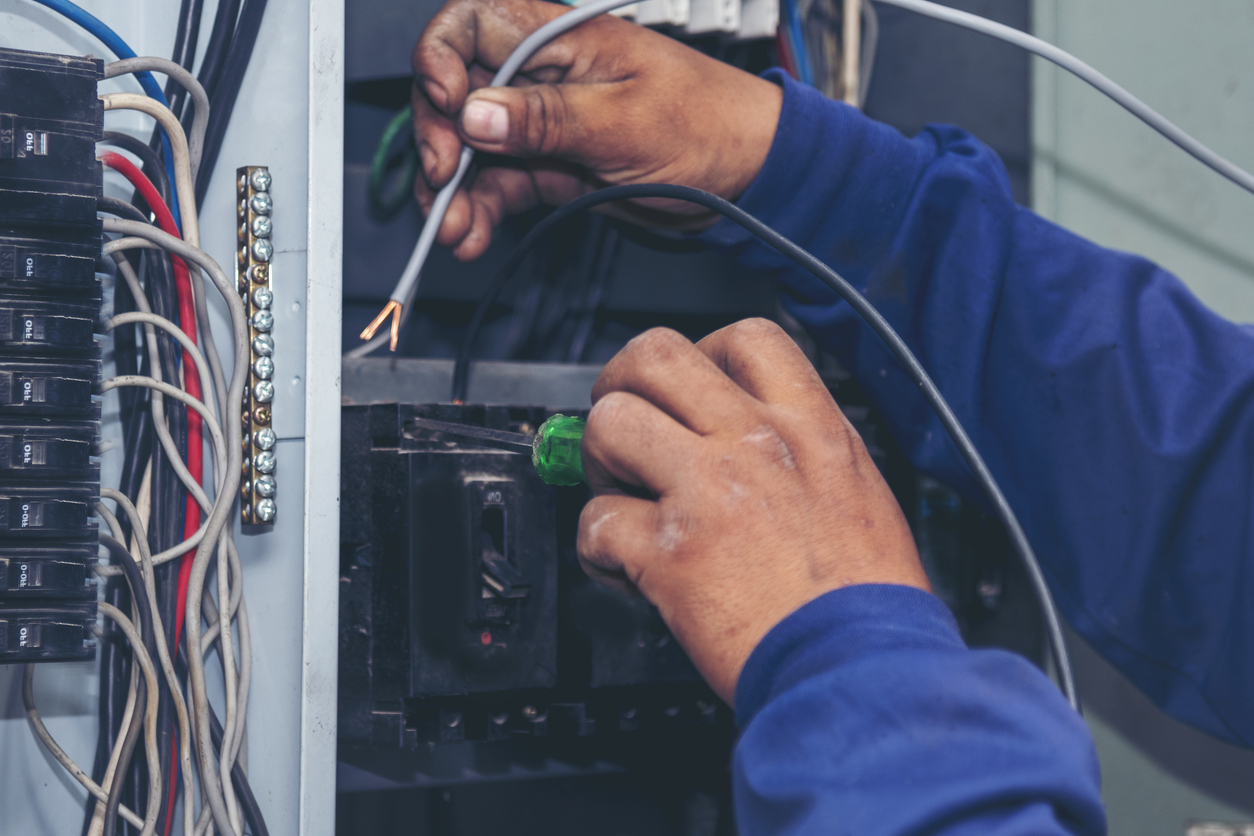
Most homeowners don’t know what’s happening inside their electrical panel until something goes wrong. A smart electrical panel changes that by giving you real-time visibility into how your home uses power, circuit by circuit, every hour of every day. That level of home energy insight used to be available only in industrial facilities. Now it’s making its way into homes across Greater Houston.
This post breaks down how smart panels work, what the benefits of a smart panel actually look like in daily use, and how to determine whether your home is a good candidate for a panel upgrade.
Smart Panels at a Glance
- A smart electrical panel replaces your existing breaker box and adds circuit-level monitoring and remote control through an app or dashboard.
- These systems can automatically shift power to high-priority circuits during an outage or grid event.
- An energy monitoring panel tracks real-time usage, helping lower your monthly utility bills.
- Smart panels integrate directly with EV chargers, solar systems, and battery storage.
- Installation requires a licensed electrician and, in most cases, a permit.
What Is a Smart Electrical Panel?
Your electrical panel is the hub that routes power from the utility grid to every circuit in your home. A standard panel does that job passively; breakers trip when a circuit is overloaded, and that’s about all the feedback you get. A smart circuit breaker panel does the same job but adds a layer of digital intelligence.
Each circuit gets its own smart breaker that communicates with a central controller. That controller tracks usage, detects irregularities, and can be managed remotely through a smartphone app. The result is an electrical system you can actually see and interact with, rather than one you only notice when something breaks.
How It Differs from a Standard Panel Upgrade
A standard electrical panel installation or replacement upgrades your amperage and replaces aging hardware, but the panel itself remains passive. You get more capacity, but not more visibility.
A smart panel upgrade delivers capacity and control. The two aren’t mutually exclusive either. In many cases, a homeowner upgrades to a higher-amperage service when installing a smart panel, since adding EV chargers, battery storage, or whole-home electrification typically requires more capacity.
What Smart Panel Benefits Look Like in Practice
The pitch for smart panels centers on visibility and control, but it helps to see what that means in real terms. Here are the features that matter most for Houston homeowners.
Circuit-Level Energy Monitoring
With a traditional panel, your energy bill tells you how much power you used in a month. An energy monitoring panel tells you which circuits are used by it, when, and how much. That granularity makes it much easier to identify appliances that are drawing more than expected or to catch unusual spikes that could signal a developing electrical issue.
For homeowners on a time-of-use rate plan from their utility, this data becomes even more valuable. You can see exactly when your usage peaks and adjust habits or automate load shifts accordingly.
Remote Shutoff and Circuit Control
One underappreciated smart panel benefit is the ability to shut off individual circuits from your phone. If you’re away from home and want to confirm that a specific appliance is off, or cut power to a circuit that’s behaving oddly, you can do that without touching the panel.
Some systems also allow you to set automated rules, such as shutting off non-essential circuits during peak rate hours or routing power away from lower-priority loads when the system is running close to capacity.
Fault Detection and Alerts
Smart panels monitor for voltage irregularities, overloads, and other faults in real time. Instead of finding out about a problem after it trips a breaker or, worse, causes a fire, the system can alert you the moment it detects something off.
This is particularly relevant in Houston, where high humidity and aging wiring in older neighborhoods can contribute to corrosion and insulation degradation over time. Early detection matters.
How a Smart Panel Integrates with EV Chargers, Solar, and Batteries
One of the more practical reasons to consider a smart panel upgrade is what it makes possible in the future. If you’re planning to add an EV charger, solar panels, or a battery storage system, a smart panel is the connective tissue that makes all of those systems work together efficiently.
EV Charging Integration
EV charger installation adds a significant load to a home’s electrical system. Without smart load management, that charger competes with your HVAC, appliances, and other active circuits. A smart panel can monitor total load in real time and throttle or pause the EV charger automatically when the system approaches its capacity limit, without you having to think about it.
Battery Storage Coordination
When paired with a battery storage system, a smart panel controls how and when that energy is used. During an outage, it automatically shifts essential circuits to battery power and can shed non-essential loads to extend backup duration. During normal operation, it manages when the battery charges and discharges based on your usage patterns and rate schedule.
Solar and Bidirectional Charging
Smart panels are designed to work alongside solar systems and bidirectional EV chargers that can send power back to your home’s circuits during an outage. Instead of managing each system separately, the smart panel serves as a single coordination point for all incoming and outgoing power flows.
Is a Smart Panel the Right Move for Your Home?
A smart panel upgrade is worth serious consideration if any of the following apply to your situation:
- You’re already planning to add an EV charger or battery storage system
- Your current panel is more than 20–25 years old or approaching its capacity limit
- You’re interested in tracking and reducing your home’s energy use
- You’ve experienced recurring circuit breaker trips or unexplained electrical issues
- You’re building new or doing a major renovation and want to set the electrical system up for the long run
If your main goal is simply to replace a failing panel without adding smart features, a standard panel replacement may be the right call. The two aren’t the same, and a knowledgeable electrician can walk you through the difference based on your home’s specific situation. The U.S. Department of Energy recommends a professional home energy assessment as a useful starting point for any homeowner considering a major electrical upgrade.
It’s also worth knowing that smart panels may qualify for federal tax credits or utility rebates depending on the installation context. The Database of State Incentives for Renewables & Efficiency (DSIRE) is a reliable resource for checking what’s available in Texas.
Frequently Asked Questions About Smart Electrical Panels
How long does it take to install a smart electrical panel?
Most smart panel installations take one full day, though the timeline can extend to two days if the project includes a service capacity upgrade or significant wiring work. Before installation begins, your electrician will pull the necessary permits, which can add a few days to the overall schedule depending on your municipality.
The physical installation involves removing your existing panel, mounting the new unit, reconnecting your circuits to the smart breakers, and configuring the monitoring software. After installation, a final inspection is required to confirm everything meets local code. A licensed electrician will coordinate that inspection on your behalf.
Will a smart panel work if the power goes out?
A smart panel on its own does not generate or store power, so it won’t keep your lights on during an outage without a backup source. Where it becomes valuable during an outage is when it’s paired with a battery storage system or a standby generator. In those setups, the smart panel manages which circuits receive power from the backup source and can automatically shed non-essential loads to extend the duration of your backup power. Some smart panels also maintain limited monitoring and control functions through cellular connectivity even when grid power is down. If outage resilience is a priority, your electrician can design the system around that goal from the start.
Can a smart panel lower my electricity bill?
It can, though the savings depend on how your household uses power and what rate plan you’re on. The circuit-level energy data a smart panel provides makes it easier to identify appliances or habits that are driving up your bill, which is information most homeowners simply don’t have access to with a standard panel. If your utility uses time-of-use pricing, the smart panel can automate load shifting to avoid peak-rate hours, reducing your spending without requiring you to adjust anything manually. Over time, those adjustments add up, especially in homes with high electricity demand from EV charging, HVAC, or other large loads. Think of the monitoring as a tool that makes every other energy-saving decision more informed.
What You’re Getting Out of a Smart Electrical Panel
Smart panels give homeowners something a traditional panel never could: a clear picture of how their home uses electricity and the tools to act on that information. The combination of real-time energy monitoring, automated load management, and seamless integration with EV chargers and batteries makes these systems a logical foundation for any home moving toward greater electrification.
Whether you’re dealing with an aging panel, planning an EV charger install, or simply looking for more control over your energy use, understanding your panel upgrade options is the right place to start.
Schedule a Smart Panel Consultation with Colwell Electric
Colwell Electric installs smart electrical panels for Houston homeowners, handling everything from the upfront load assessment to final inspection. Call us at (713) 849-4427 or contact us online to schedule a consultation with a licensed electrician.