

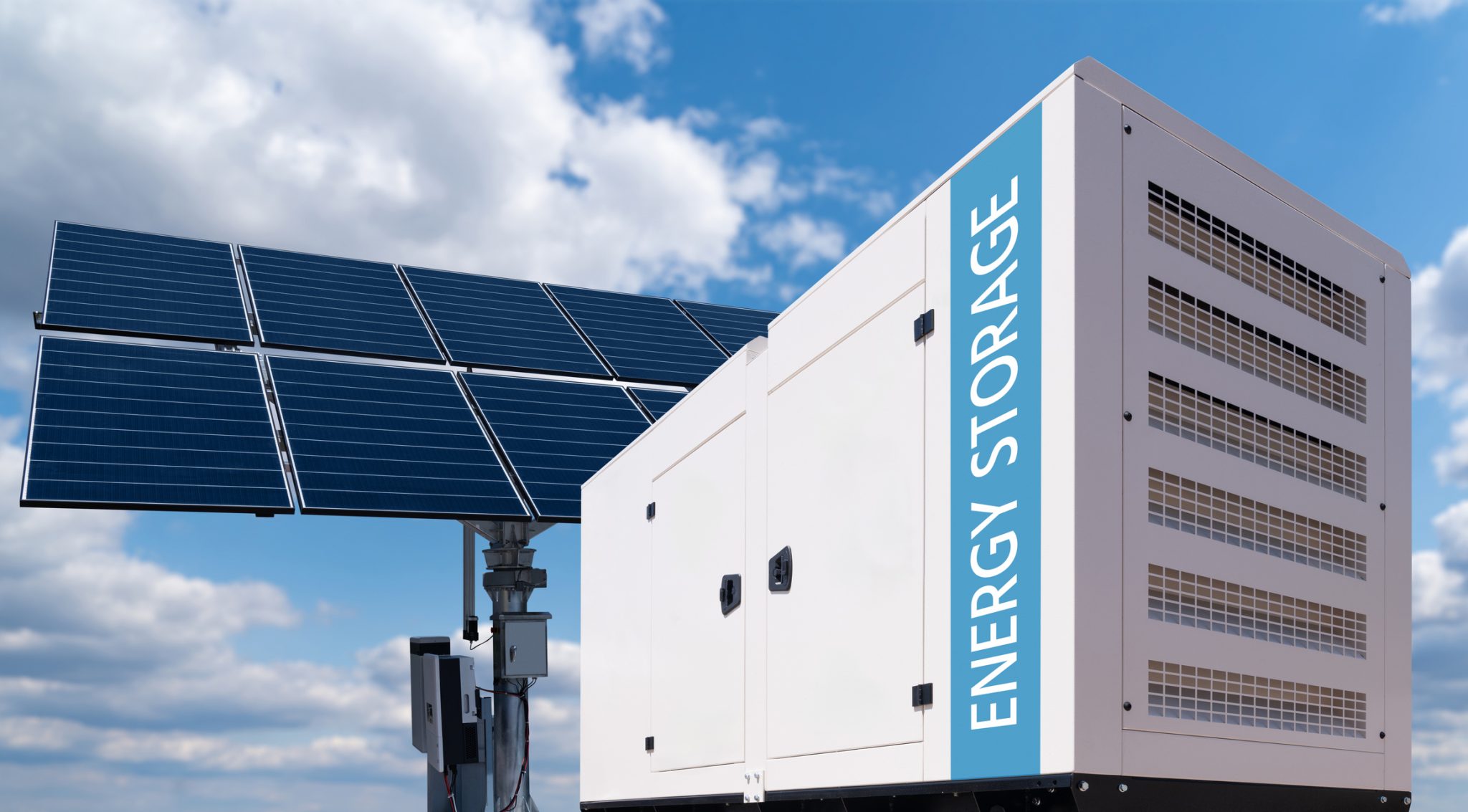
You invested in solar to cut your energy costs, so it may be a surprise to learn the panels on your roof can go dark when the grid does. Houston businesses that have endured a hard freeze know how quickly an outage turns into lost sales, spoiled inventory, and idle crews. The fix is pairing your solar with commercial battery backup, which stores your daytime generation and keeps essential systems running when utility power drops.
This guide explains how solar and battery storage work together, what to weigh before adding storage, and how to plan ahead for winter storm season.
Battery Storage Importance at a Glance
- Solar alone usually goes offline during a grid outage, so storage is what keeps your lights on.
- Batteries store daytime solar output for evenings, outages, and peak-demand hours.
- A battery project often requires panel, wiring, grounding, and transfer switch work.
- Battery storage can be combined with a standby generator for layered backup power.
Why Doesn’t Solar Alone Keep Your Business Running During an Outage?
Most commercial solar systems are grid-tied, meaning they rely on utility power to operate. When the grid goes down, the inverter shuts the system off automatically to protect utility crews working on the lines. Your panels may sit in full sun while your building has no power at all.
Winter adds another wrinkle. Shorter days and cloudy weather reduce solar production just as heating demand climbs. Without storage, you have no way to bank the energy your array produced earlier in the day for the hours when you need it most.
How Does Battery Storage Work With a Solar Array?
A battery system captures solar energy that your building doesn’t use right away and stores it for later use. When an outage hits, a transfer switch disconnects your building from the grid, and the battery powers the circuits you have selected. Colwell Electric installs battery storage and wires it into your existing electrical system and solar setup, including transfer mechanisms, load controls, and safety redundancies.
Storing Daytime Solar for Evenings and Peak Hours
Commercial utility bills often include charges tied to your highest demand periods. Batteries can release stored solar energy during those periods, reducing how much you draw from the grid at peak times. For retail and warehouse operations in particular, this can soften peak usage charges while adding redundancy.
Keeping Critical Loads Running During an Outage
You don’t need to back up every circuit to protect your operation. Most businesses prioritize the equipment that would cause the most damage if it went down:
- Refrigeration and cold storage
- Servers, networking, and data equipment
- Point-of-sale and security systems
- Emergency and egress lighting
- Critical process or production equipment
A load assessment determines which circuits make the list and sizes the battery accordingly.
Which Businesses Benefit Most From Commercial Battery Backup?
Battery storage supports uptime, reduces peak energy costs, and provides backup power across a range of commercial settings. These industries tend to benefit most:
- Healthcare facilities: Keep critical systems running and support emergency preparedness.
- Data centers: Protect uptime and reduce reliance on diesel-only backup.
- Industrial and manufacturing sites: Smooth load fluctuations and avoid downtime from grid instability.
- Retail and warehousing: Manage peak usage charges and add redundancy to essential operations.
- Offices and educational campuses: Support sustainability goals and add resilience to daily energy use.
If your building already has solar, you have a head start. The array is in place, and storage adds the missing piece that lets it work through an outage.
Should You Choose Battery Storage, a Generator, or Both?
Batteries and generators solve different problems, and many facilities use both. Batteries can bridge the gap while a generator comes online, and generators can run for as long as the fuel supply lasts, which matters in a multi-day outage.
| Battery storage | Standby generator | |
| Best at | Short outages and smoothing power transitions | Long outages and heavy loads |
| Runtime | Limited by battery capacity, recharged by solar | Limited by fuel supply |
| Fuel | None | Requires a fuel connection or supply |
| Everyday value | Stores solar and can reduce peak demand costs | Mostly standby use with routine maintenance |
Our team installs and services commercial generator systems, including transfer switches, so the combined setup can operate as a single coordinated system.
What Should You Check Before Adding Battery Storage to Solar?
Storage adds load, equipment, and safety requirements to your electrical system, so the planning matters as much as the hardware. A licensed electrician should assess your existing panels and wiring before you settle on a battery size.
Installing commercial battery storage typically involves several electrical components:
- Panel upgrades: Confirm the main service panel can support the added load.
- Subpanel and breaker configuration: Isolate the system with the right breakers and controls.
- Wiring and conduit installation: Run code-compliant conduit between storage units and power distribution.
- Grounding and bonding: Meet National Electrical Code (NEC) standards.
- Transfer switch integration: Connect batteries with generators, solar, or utility power.
Some businesses also add smart electrical panels that support future-ready features such as vehicle-to-grid integration.
Safety Codes and Inspections
Battery systems fall under several standards, including the NEC, NFPA 70E, and UL 9540, which cover isolation, fault protection, ventilation, and labeling. Healthcare and other sensitive facilities may also need to meet NFPA 99. Colwell Electric coordinates with local inspectors and third-party testers where required.
Solar and Battery Storage FAQs
Can I add battery storage to an existing solar system?
In many cases, yes. Whether the retrofit is simple depends on your inverter, the capacity of your main service panel, and how your current system is wired. Your solar installer can confirm details about your array and inverter, and our electricians assess the electrical side. Starting with that assessment keeps the project scope and schedule realistic.
Do I need solar to get value from commercial battery storage?
No. A battery can reduce peak demand costs and provide backup power on its own, and storage can qualify for the federal credit without solar. Pairing it with solar lets you recharge from your own generation and store that energy for later. Many facilities start with one and add the other as their goals change.
How is a commercial battery storage system maintained?
Maintenance centers on inspection and testing. Technicians use thermal imaging to spot hot spots or degraded components, test connections and contactors, and service panels and breakers. They also check surge protection, grounding, and wiring. Scheduled service plans and 24/7 emergency repair keep the system compliant and online.
Make Your Solar Investment Storm-Ready Before Winter Arrives
Solar panels cut your energy costs, but they can go dark when the grid does. Adding commercial battery storage lets that investment keep working during outages and can lower peak-demand costs along the way. Starting the electrical planning before cold weather arrives leaves room for design, permitting, and inspections.
For more on storm readiness, see our guide to power outage prep before the next storm and our look at industrial building electrification trends.
Plan Your Battery Storage Project With Colwell Electric
Colwell Electric has served Greater Houston since 1990, and our electricians design, install, and maintain the power systems behind commercial battery storage. Contact us or call 713-849-4427 to schedule a consultation or inspection.