

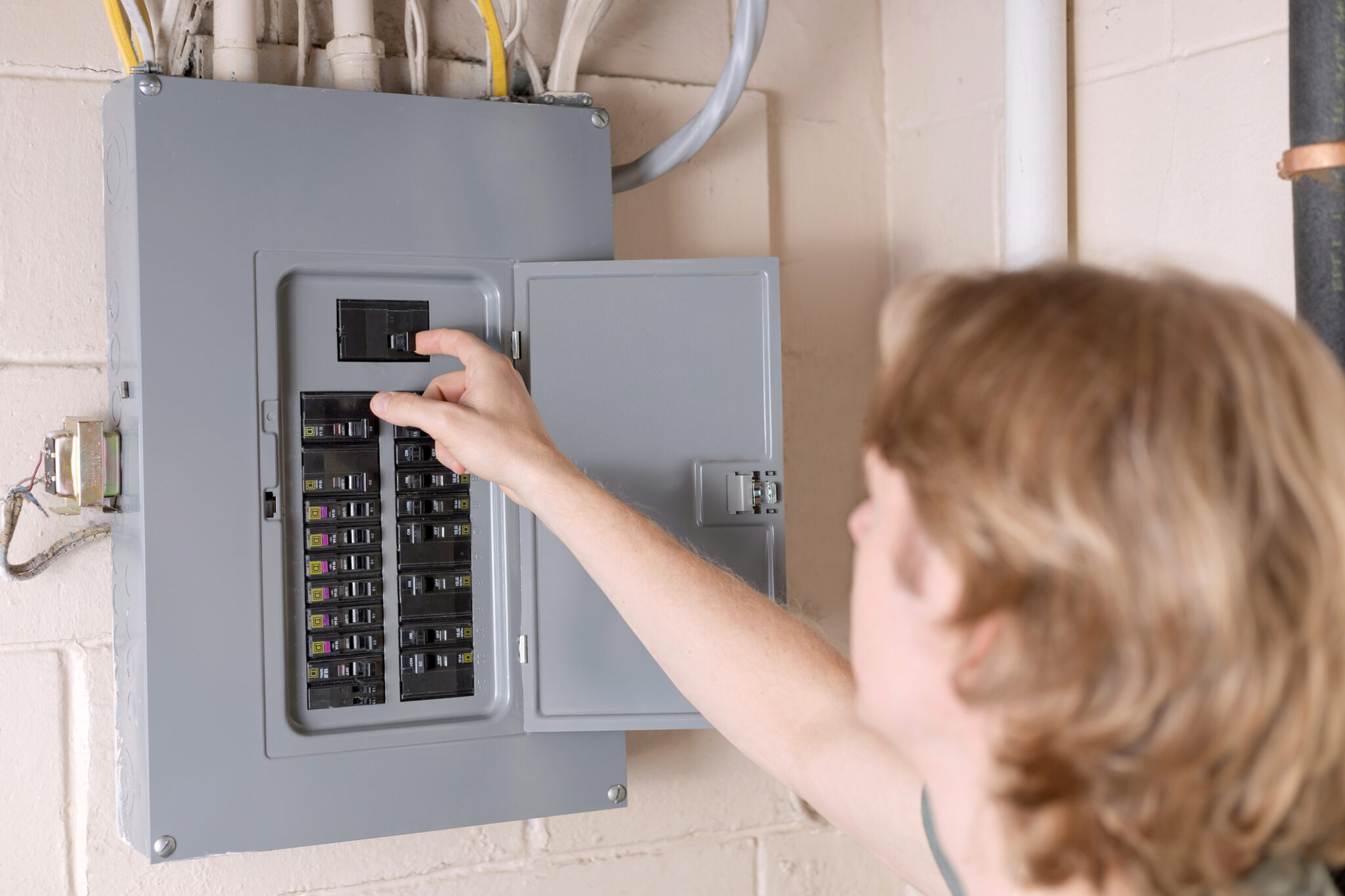
Few household issues are more frustrating than a circuit breaker that keeps tripping. One minute everything is working fine, and the next you’re in the dark, resetting switches and wondering what went wrong. While it can feel like an inconvenience, a tripping breaker is actually doing its job.
Circuit breakers are designed to protect your home, your appliances, and your safety. Knowing why they trip helps you respond the right way instead of creating bigger problems. In this guide, we’ll break down what circuit breakers do, the most common causes of trips, what you should and should not do when it happens, and when it’s time to bring in a professional.
At a Glance
- Circuit breakers trip to prevent damage and fire risks.
- Overloaded circuits are one of the most common problems.
- Repeated trips often signal deeper electrical issues.
- Resetting a breaker incorrectly can create safety hazards.
What a Circuit Breaker Actually Does in Your Home
A circuit breaker acts as a safety switch for your electrical system. Its job is to stop the flow of electricity when something goes wrong, protecting your wiring, appliances, and your home from damage. Instead of allowing wires to overheat or systems to fail, the breaker shuts power off automatically.
When electricity flows normally, the breaker stays engaged. When it detects a problem, such as too much current or unsafe conditions, it trips and cuts power to that circuit. This prevents overheating, fire risks, and equipment damage.
Not every trip means something is seriously wrong. Sometimes a breaker trips because a circuit is overloaded by everyday use. Other times, it signals a deeper issue that needs attention.
Common Reasons Your Breaker Trips
Knowing the most common circuit breaker trip causes helps you recognize when a problem is minor and when it signals something more serious. One of the leading reasons breakers trip is an electrical overload. This happens when too many devices or appliances draw power from the same circuit at once. The breaker trips to prevent wires from overheating and creating a fire risk.
Short circuits are another frequent cause. These occur when a hot wire comes into contact with a neutral wire, creating a sudden surge of electricity. Short circuits often trip breakers immediately and may be accompanied by sparks or a burning smell, which should never be ignored.
Ground faults are similar but involve electricity flowing where it should not, often through moisture or damaged wiring. These are especially common in areas like kitchens, bathrooms, garages, and outdoor circuits.
Finally, aging or faulty breakers themselves can cause repeated trips. Over time, breakers wear out and may trip more easily or fail to reset properly. In these cases, the issue is not the load but the breaker’s ability to function safely. Identifying the exact cause is essential before deciding on breaker repairs or replacement.
Safe Reset Practices & What Not to Do
Resetting a tripped breaker is sometimes safe, but only when you understand what caused the trip. Before resetting, unplug or turn off devices connected to the affected circuit. This reduces load and helps prevent the breaker from tripping again immediately.
When you reset a breaker, move it fully to the off position first, then switch it back on. If the breaker holds, you can gradually restore power by plugging devices back in one at a time. If it trips again right away, that is a sign the issue is not a simple overload.
There are also things you should never do. Do not force a breaker to stay on, and do not repeatedly reset it, hoping the problem will go away. Avoid replacing breakers yourself unless you are properly trained, since panels contain live electrical components. Following basic reset safety practices helps protect you from shock, fire risk, and further electrical damage.
Why Breaker Maintenance & Replacement is Important
Circuit breakers are mechanical devices, and like any component, they wear over time. Breaker maintenance helps ensure breakers trip when they should and stay engaged when conditions are normal. Loose connections, corrosion, or heat damage can all affect performance.
In some cases, breaker replacement is the safest option. Breakers that trip frequently without a clear cause, feel hot to the touch, or fail to reset properly may be nearing the end of their service life. Replacing a failing breaker restores reliable protection and reduces risk.
Routine inspections also help identify outdated panels or breakers that are no longer suited for modern electrical demands. Maintaining and replacing breakers when needed keeps your system responsive, reliable, and prepared to handle everyday use safely.
Knowing When It’s Time to Call a Professional
Circuit breakers are designed to protect your home, but repeated trips or unclear causes should never be ignored. When resets do not hold, or when signs like burning smells, buzzing, or warm panels appear, it is time to seek professional help. Electrical issues often worsen quietly until they become serious safety hazards. On top of everything, working with a professional ensures everything is installed to code and backed fully.
Get Leading Electrical Services in Texas With Colwell Electric
If your breakers keep tripping or you are unsure what is safe to reset, we can help. At Colwell Electric, we provide professional electrical services throughout Texas, including breaker inspections, maintenance, and replacement. Our team focuses on safety, reliability, and clear solutions that protect your home. When you’re ready to schedule an evaluation, reach out online or give us a ring at 713-849-4427 and get peace of mind from a system you can trust.